

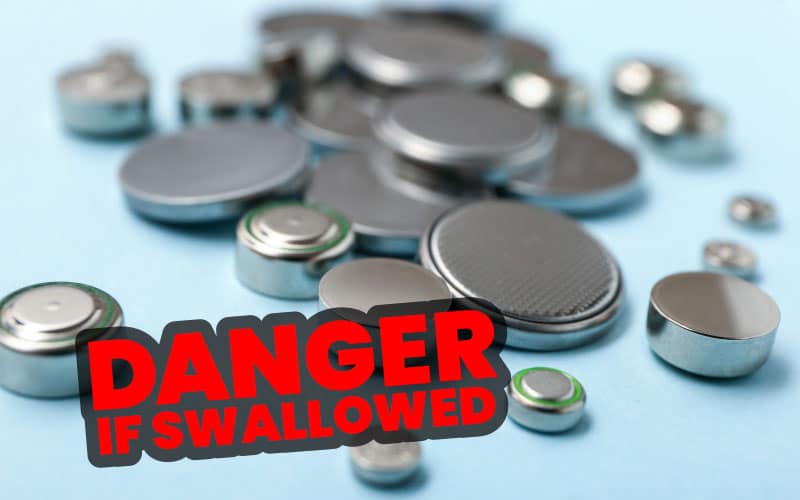
Would you know what to do if a child swallowed a button battery?
Button batteries are found in everyday household items, including remote controls, car keys, watches, toys, kitchen scales, hearing aids and musical greeting cards.
They may be small, but if swallowed, they can cause devastating internal injuries and even death.
At Pulse First Aid Training, we believe every parent, grandparent, childcare educator and first aider should know how to recognise a suspected button battery ingestion and respond immediately.
Why Are Button Batteries So Dangerous?
When a button battery becomes lodged in the oesophagus (food pipe), contact with saliva allows an electrical current to produce a highly alkaline substance that rapidly damages surrounding tissue.
Experimental studies have demonstrated that tissue injury can begin within just 15 minutes. Severe burns can develop within two hours.
Even a flat or discharged battery can cause serious injury.
Young children are particularly vulnerable because their oesophagus is narrower, making it easier for a battery to become lodged.
A suspected button battery ingestion is a medical emergency, even if the child appears perfectly well.
How Can You Tell if a Child Has Swallowed a Button Battery?
Warning signs may include:
- Unexplained drooling or difficulty swallowing
- Gagging, coughing or choking
- Vomiting or refusing food
- Chest pain or discomfort
- Noisy breathing
- Blood in vomit or saliva
- An unexplained missing battery or open battery compartment
Sometimes there are no obvious symptoms at all.
Never wait for symptoms to develop before seeking help.
What Should You Do if a Child Swallows a Button Battery?
Step 1: Seek emergency medical advice immediately.
Call 000 if the child has difficulty breathing, significant bleeding or other serious symptoms.
Otherwise, call the Australian Poisons Information Centre on 13 11 26, available 24 hours a day, and arrange immediate emergency department assessment as advised.
Do not wait for symptoms, and do not induce vomiting.
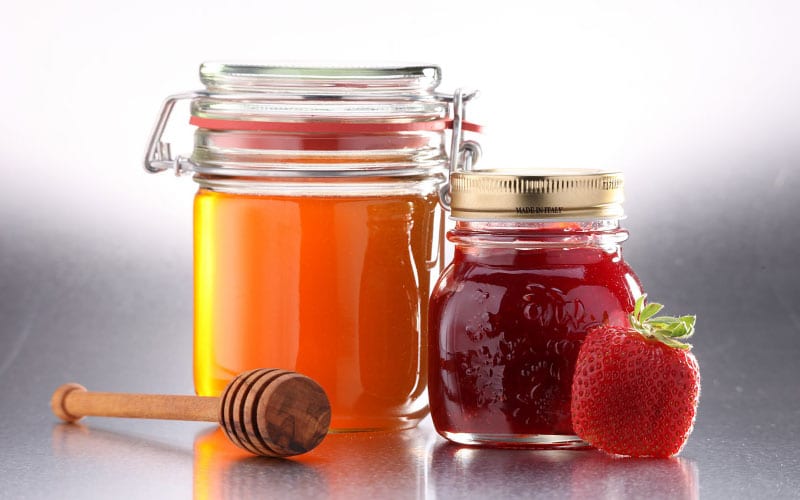
Step 2: Ask about honey or jam.
The Australian and New Zealand Committee on Resuscitation (ANZCOR) provides specific recommendations for honey and jam following suspected button battery ingestion.
For children aged 12 months and older:
- Give 10 mL (two teaspoons) of honey every 10 minutes.
- If honey is unavailable, jam may be used instead.
For infants under 12 months:
- ANZCOR recommends 10 mL (two teaspoons) of jam every 10 minutes.
- Never give honey to infants under 12 months, because of the risk of infant botulism.
Honey or jam must not be given if the child has breathing difficulties or bleeding, or is unable to swallow safely.
Other Australian clinical protocols specify using honey or jam only within 12 hours of suspected ingestion and limiting treatment to six doses (60 mL in total).
Follow the advice of the Poisons Information Centre or treating emergency clinicians.
Do not delay hospital treatment to find honey or jam. Give nothing else by mouth.
Why Do Australian States Sometimes Give Different Advice?
Parents may encounter different instructions when searching online.
New South Wales
The NSW Poisons Information Centre advises parents to call 000 if their child is having difficulty breathing.
If the child is breathing normally, call 13 11 26. Its public guidance says not to allow eating or drinking while awaiting medical advice.
However, the Sydney Children’s Hospitals Network clinical guideline permits honey under specific conditions for children over 12 months.
Queensland
The Queensland Poisons Information Centre advises parents to call 13 11 26 before giving anything by mouth. Staff can assess the situation and advise whether honey should be given.
Queensland Ambulance Service provides more specific clinical guidance:
- Honey or jam for children aged 12 months and older.
- Jam for infants under 12 months.
- 10 mL every 10 minutes.
- Maximum of six doses, or 60 mL.
- Only within 12 hours of suspected ingestion.
These measures must never delay transport to hospital.
Victoria
The Royal Children’s Hospital Melbourne recommends honey for children over one year of age with an oesophageal button battery, within 12 hours of ingestion, while awaiting urgent treatment.
The recommended dose is 10 mL every 10 minutes, up to six doses.
Tasmania
Consumer Affairs Tasmania recommends immediately contacting the Poisons Information Centre on 13 11 26 if a button battery may have been swallowed or inserted into the body.
Call 000 if the child is having difficulty breathing.
What Does This Mean for Parents?
The safest message is straightforward:
Call 13 11 26 immediately, follow the advice given, and ensure the child receives urgent hospital assessment.
Honey and jam are first aid measures intended to reduce injury while definitive treatment is arranged. They are not treatments that remove the battery.
Why Honey or Jam?
Research suggests that honey can reduce the severity of chemical burns caused by a button battery lodged in the oesophagus.
Honey may help coat the battery and slow the rise in alkalinity responsible for tissue damage.
Jam has also shown potential protective effects in experimental research.
However, the available evidence comes mainly from laboratory and animal studies, with limited human observational evidence.
Honey and jam may slow tissue damage, but they cannot prevent all injuries or replace urgent battery removal.
New Button Batteries With Bitter Coatings and Warning Dyes
Manufacturers have introduced additional safety features to help reduce accidental swallowing.
Duracell – Bitter-Tasting Coating
Selected Duracell lithium coin batteries, including CR2016, CR2025 and CR2032 products, have a bitter-tasting coating designed to discourage swallowing.
However, a child may still swallow the battery before reacting to the unpleasant taste.
Energizer – Colour Alert Technology
Selected Energizer button batteries feature a colour-alert coating that can release blue dye when exposed to moisture.
This may leave blue staining around a child’s mouth, on their tongue or hands, providing a possible warning of battery exposure.
Not all batteries from these brands have these features.
The absence of a bitter taste reaction or blue staining does not rule out button battery ingestion.
How Can You Prevent Button Battery Injuries?
- Check toys and electronic devices for secure, child-resistant battery compartments.
- Keep spare batteries in their original child-resistant packaging and out of children’s reach.
- Never leave loose batteries on tables, benches or in accessible drawers.
- Dispose of used batteries promptly and safely. Even flat batteries are dangerous.
- Choose devices without button batteries whenever possible.
- Make sure grandparents, babysitters and childcare educators understand the risks.
Every Minute Matters
Button battery ingestion can be difficult to recognise, and serious internal injury may develop before a child appears unwell.
Knowing the warning signs, acting quickly and understanding current first aid recommendations could save a child’s life.
At Pulse First Aid Training, we are passionate about giving people the knowledge and confidence to respond in an emergency.
Learn First Aid. Recognise the Danger. Act Quickly.
This article provides general first aid information based on ANZCOR Guideline 9.5.1 and Australian clinical and poison information guidance. It does not replace advice from the Poisons Information Centre or emergency medical services.


